The Recorder Cannot Hear the Room: Judgment, Silence, and the Automated Minute

In 2026, the AI notetaker has become an ordinary fixture of the American conference room. It joins the calendar invite, waits through the small talk, and produces a tidy summary before the participants have reached their cars. The appeal is obvious: fewer handwritten minutes, faster follow-up, and a searchable record of every commitment. Yet the convenience carries a quiet risk. Firms are beginning to treat the transcript as the memory of the decision, when in fact it is only a record of the words.
A decision is rarely made in the sentences that surround it. It is made in the pause before a partner speaks, the glance exchanged across the table, the caveat that is offered and then withdrawn, the energy that leaves the room when a preferred option is set aside. Automated systems are good at capturing content. They are poor at capturing context. And context is what explains why a firm chose one path and not another.
The Difference Between a Record and a Recollection
A transcript answers a narrow question: who said what, and when? That is useful. It is not sufficient. Institutional memory must answer a larger question: why did this seem wise at the time? A useful record preserves the alternatives that were considered, the objections that were raised, the assumptions that were not tested, and the informal signals that shaped the outcome. Those elements rarely appear in a summary generated by software trained to identify action items and consensus.
The problem is not that AI summaries are inaccurate. Many are quite accurate at the level of language. The problem is that they are smoothing. They remove repetition, compress discussion, and present a coherent narrative where the actual meeting may have contained uncertainty. A summary that reads cleanly can create false confidence. Months later, when the decision is revisited, the firm may discover that its record explains the outcome but not the judgment behind it.
What Automated Summaries Systematically Lose
Automated notes tend to lose four categories of information, each of which matters to advisory work.
First, they lose dissent. A summary may note that a concern was raised, but it often omits the force of the concern, who supported it, and whether it was resolved or simply outvoted. In professional firms, the strongest objection is often the most valuable part of the record. It marks the boundary of the firm's confidence.
Second, they lose hesitation. The difference between an enthusiastic yes and a reluctant yes is rarely captured in text. Yet that difference may predict whether a client relationship will hold under pressure. A firm that cannot distinguish between agreement and acquiescence is a firm that cannot read its own commitments.
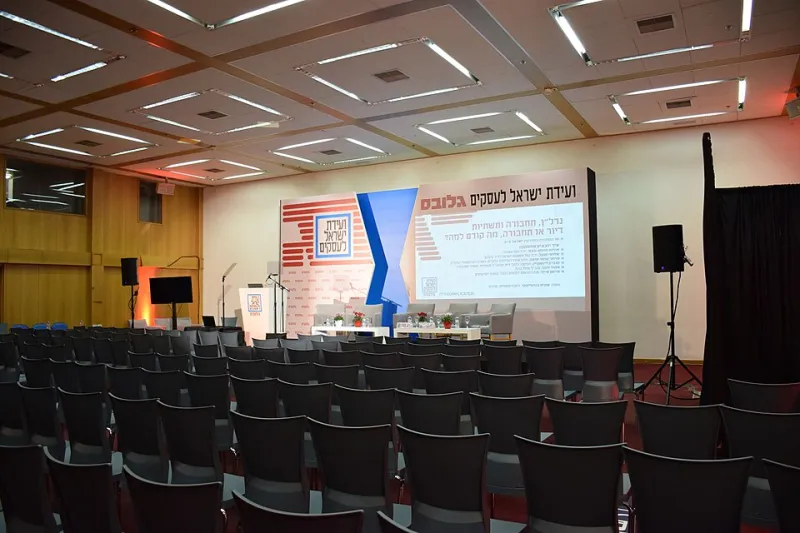
Third, they lose the room. Tone, pacing, side conversations, and the order in which people speak are not decorative details. They reveal where authority actually sits and which questions were considered too sensitive for the agenda. A transcript records the meeting that was spoken. It does not record the meeting that was felt.
Fourth, they lose silence. What was not discussed can be as important as what was. The absent client, the unasked question, the topic that everyone avoided—these omissions are part of the decision. Automated tools are not designed to flag them, and human readers of summaries are not always trained to notice.
Why This Matters for Advisory Firms
Advisory practices sell judgment. Their value lies not in the production of meeting notes but in the quality of the reasoning that informs a client's choices. If the firm's memory is reduced to automated summaries, the reasoning becomes harder to inspect, teach, and defend.
This has consequences for succession as well. Junior colleagues learn how decisions are made by observing the record of past decisions. If that record contains only outcomes and action items, they learn what the firm decided but not how it thought. Over time, the firm's judgment becomes less transferable. The transcript remains searchable, but the practice becomes less explainable.
There is also a client-facing risk. When a client asks why a recommendation was made, a firm should be able to reconstruct the alternatives, the trade-offs, and the concerns that shaped the advice. A summary that says the team "discussed options and agreed on a path forward" is not a record of judgment. It is a press release.
A Protocol for Pairing Capture With Annotation
The answer is not to reject AI notetakers. They are useful, and their use will only expand. The answer is to pair automated capture with a deliberate human layer. A practical protocol can be simple enough to survive a busy calendar.
Designate a human steward for each significant meeting. This person is not the scribe of old, transcribing every remark. The steward is responsible for a short annotation memo completed within twenty-four hours. The memo should record four things: the decision as understood, the strongest alternative considered, the most serious objection raised, and the questions left unresolved. A fifth field may be added for the mood of the room, described in plain language rather than a rating scale.
Keep the AI transcript as a supporting artifact, not the primary record. Store the annotation memo alongside it. The memo should be brief—one page is usually enough—and it should be written in prose, not bullet fragments. Prose forces the writer to make judgments about relevance and emphasis. That act of judgment is itself a form of institutional memory.
Review the pairing at regular intervals. Once a quarter, ask whether the annotation memos would allow a colleague six months removed from the meeting to reconstruct the reasoning. If not, adjust the protocol. The test is not completeness. The test is usability.
Finally, protect the dissent. A record that preserves only consensus is a record that teaches the firm to avoid candor. The annotation memo should make room for the objection that did not prevail, without turning the record into a catalog of blame. The purpose is to preserve judgment, not to reopen every argument.
Memory Is a Practice, Not a File
AI notetakers will continue to improve. They will summarize more accurately, integrate with more systems, and become more deeply embedded in the daily rhythm of American firms. That is not a reason to surrender the work of recollection. A firm's memory is not a file format. It is a practice of paying attention to what matters and writing it down with care.
The recorder can hear the words. It cannot hear the room. The firms that understand the difference will be the ones whose records remain useful long after the meeting has ended.