Ten Minutes in the Anteroom: What the Wait Before the Meeting Tells You About a Firm
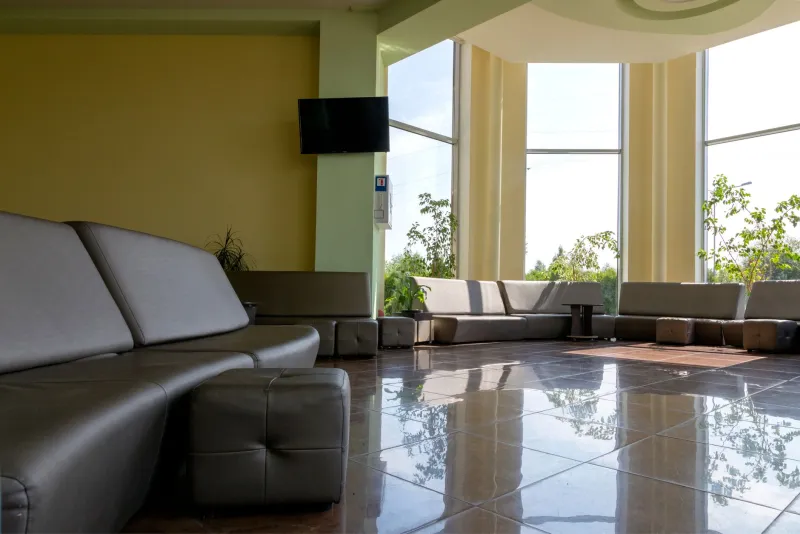
Every client relationship has a moment before it begins. Not the handshake, not the engagement letter — the wait. The eleven minutes in a leather chair while someone finishes a call. The hold music that loops a synth version of a song nobody chose. The Zoom anteroom with your own face staring back at you, uninvited, while the host is 'having audio difficulties.'
We tend to treat these intervals as dead air, incidental to the real business that follows. I have come to believe the opposite: the wait is the first deliverable a firm produces, and most firms deliver it badly.
The Wait Is a Document
A firm's lobby says what its website carefully avoids saying. In field visits across professional services offices — a regional accounting practice in Columbus, a boutique consultancy in Atlanta, a mid-market law firm in Dallas — I began keeping notes on what happens in the ten minutes before a meeting officially starts.
The pattern is consistent. Firms that respect clients' time tend to share a handful of small, observable behaviors: someone is expecting you by name; the wait, when it occurs, is acknowledged within ninety seconds; there is something worth reading that is not a stack of the firm's own brochures; and no one makes you feel like an interruption to the day's real work.
Firms that don't share these behaviors are not necessarily careless. They simply have never audited the wait. It doesn't appear on any org chart, so no one owns it.
What the Anteroom Signals
The waiting room is an odd institution: a space a firm builds specifically for the activity it claims to value least. But clients read it fluently, whether or not the firm intends the message.
A receptionist who greets a visitor by name signals preparation. A host who emerges two minutes early rather than two minutes late signals that the meeting's start time was a commitment, not a suggestion. A virtual waiting room with a personalized message — 'Mary will join at 2:00' — signals the same thing through glass.
Contrast this with the alternative: the visitor left holding a coat in an empty lobby; the hold queue that promises 'your call is important to us' for nineteen minutes; the video call where the client sits alone, watching themselves breathe, for six unexplained minutes. None of these are betrayals large enough to complain about. All of them are betrayals precise enough to remember.
Phone-Free Is Not the Point
Some firms have responded to the wait by making it more pleasant — espresso machines, phone-free zones, thoughtful reading material. These are improvements, but they risk treating the symptom. A beautiful lobby with a twenty-minute unacknowledged delay is a gilded apology.
The deeper discipline is not making the wait enjoyable. It is making the wait intentional. That means three things.
First, the wait should be bounded. A client should never wait without knowing for how long. 'She'll be with you in five minutes' is a small sentence that does enormous work.
Second, the wait should be owned. Someone — a named person, not a department — is responsible for what happens between arrival and meeting. When no one owns it, the client falls into the gap between roles.
Third, the wait should occasionally be abolished. The most respectful wait is the one that doesn't happen. Firms that start meetings on time, every time, have discovered what the anteroom obscures: punctuality is the cheapest form of respect a firm can buy.
The Competitive Arithmetic
It is tempting to file all of this under courtesy and move on. But there is a commercial logic here that mid-market and small firms in particular should notice.
Large firms can absorb a bad wait. Their brand carries the relationship; the client forgives the anteroom because the work is presumed excellent. Smaller firms have no such ballast. For them, the wait is often the only first-hand evidence a prospective client has before deciding whether the firm is competent. Everything else — the pitch deck, the references, the case studies — is hearsay. The ten minutes in the lobby is data.
This is why I have started asking advisory clients a question they find strange: walk me through what happens when someone arrives at your office, or joins your call, ten minutes before you're ready. The answers are frequently embarrassing, and the fixes are almost always free.
Designing the Interval
For firms willing to treat the wait as a designed experience rather than a scheduling residue, the work is modest:
- Set arrival expectations in the confirmation, not at the door.
- Script the delay: what the receptionist says, what the host does when running behind.
- Audit the virtual equivalent with the same rigor — the waiting room, the 'we'll get started in a moment,' the camera that stays off two minutes past the hour.
- Give the interval one piece of content worth a client's attention. Not a brochure. Something you'd read yourself.
None of this requires capital. It requires deciding that the minutes before the meeting belong to the client, not to the firm's internal churn.
The Small Door
There is a useful habit among careful observers of institutions: judge a place not by its front door but by its small ones — the restroom, the loading dock, the waiting room. The front door is staged. The small doors are where the culture actually lives.
The wait before the meeting is the smallest door a firm has. Clients walk through it every time, and they come out having learned something true. The only question is whether the firm chose what they learned.